
Chobe Photo Safaris
in Botswana
Photograph Botswana’s Iconic Riverfront Wilderness
Discover Chobe National Park, where huge elephant herds, predator-rich floodplains, and boat-based safari experiences create one of Africa’s most rewarding wildlife photography destinations. Chobe is especially well known for its elephant concentrations and prolific birdlife.
Chobe National Park: Botswana’s Legendary
River Safari Destination
Chobe National Park is one of Botswana’s most iconic wildlife destinations, known for its vast elephant herds, rich riverfront habitat, and diverse safari experiences. In the north of the park, the Chobe River creates a green corridor that attracts extraordinary concentrations of wildlife, especially during the dry season. Botswana Tourism positions Kasane as the gateway to Chobe, sitting directly on the riverbanks beside the park.
For photographers, Chobe offers something distinct from many other safari destinations in southern Africa: the chance to combine traditional game drives with exceptional boat-based wildlife photography along the Chobe River. The riverfront is especially famous for elephants, hippos, crocodiles, buffalo, and prolific birdlife, while the broader Chobe region also includes predator-rich areas such as Savuti and Linyanti.
With more than 460 bird species recorded and some of the most photogenic riverfront wildlife viewing in Africa, Chobe delivers a safari experience that is both dynamic and visually spectacular.
Key Facts for Photographers
Chobe National Park
Chobe National Park is one of Botswana’s most iconic wildlife destinations, famous for its vast elephant herds and exceptional riverfront wildlife viewing. The park’s landscapes range from floodplains along the Chobe River to woodlands and savannah habitats that support remarkable concentrations of wildlife throughout the year.
For photographers, Chobe offers unique opportunities to capture wildlife both on traditional game drives and from boat safaris along the Chobe River, creating dynamic photographic perspectives rarely found elsewhere in Africa.
May – October
Best Time To Visit – (Dry Season)
Chobe at a Glance
Botswana’s Elephant Capital
Chobe National Park is famous for its enormous elephant population, with huge herds regularly gathering along the Chobe River and surrounding floodplains.
Legendary River Safaris
Boat safaris along the Chobe River offer exceptional opportunities to photograph elephants, hippos, crocodiles, and birdlife from a unique perspective.
Predator-Rich Ecosystem
Chobe supports strong populations of lions, leopards, and hyenas, particularly in areas such as Savuti where predator encounters are common.
Outstanding Bird
Photography
With more than 460 recorded bird species, Chobe offers exceptional bird photography including fish eagles, bee-eaters, storks, and migratory species.
The Chobe Riverfront
Hwange is renowned for its massive elephant herds, with hundreds of elephants gathering around the park’s waterholes during the dry season.
Easy Access Safari Destination
Chobe is easily reached via Kasane, making it one of Botswana’s most accessible safari destinations and easy to combine with Victoria Falls.
Why Choose a Chobe Photo Safari

Chobe National Park is one of Botswana’s most rewarding wildlife destinations, offering extraordinary opportunities to photograph large elephant herds, riverfront wildlife, and diverse birdlife. The park’s famous Chobe Riverfront creates some of the most dramatic wildlife encounters in southern Africa, while its varied ecosystems support a remarkable diversity of species.
From boat-based photography along the Chobe River to traditional game drives across the park’s interior landscapes, Chobe delivers a dynamic and visually rich safari experience.
Enormous Elephant Herds
Chobe is home to one of Africa’s largest elephant populations, with massive herds gathering along the riverfront during the dry season.
Exceptional Boat Safaris
Boat safaris along the Chobe River offer a unique perspective for photographers, allowing close wildlife encounters and dramatic riverfront photography.
Diverse Wildlife Encounters
Chobe supports a wide variety of wildlife including elephants, lions, buffalo, giraffes, antelope, and numerous other species.
Riverfront Photography
The Chobe Riverfront creates incredible photographic opportunities as animals gather along the water’s edge throughout the day.
Small-Group Photo Safaris
Our photographic safaris operate in small groups, allowing more flexibility in the field and better positioning for wildlife photography.
Hand-Picked Safari Camps
We partner with carefully selected camps around Chobe that offer excellent wildlife access and comfortable bases for photographic safaris.
Chobe’s Wildlife & Landscapes
Chobe National Park is defined by the life-giving waters of the Chobe River, which forms the park’s northern boundary and creates one of Africa’s most productive wildlife ecosystems. The river’s floodplains, grasslands, and woodlands support remarkable concentrations of wildlife, particularly during the dry season when animals gather along the riverbanks.
Large elephant herds move through the riverfront landscape alongside buffalo, antelope, and predators such as lions and hyenas. Hippos and crocodiles are common along the river itself, while the surrounding forests and plains provide habitat for giraffes, kudu, and numerous other species.

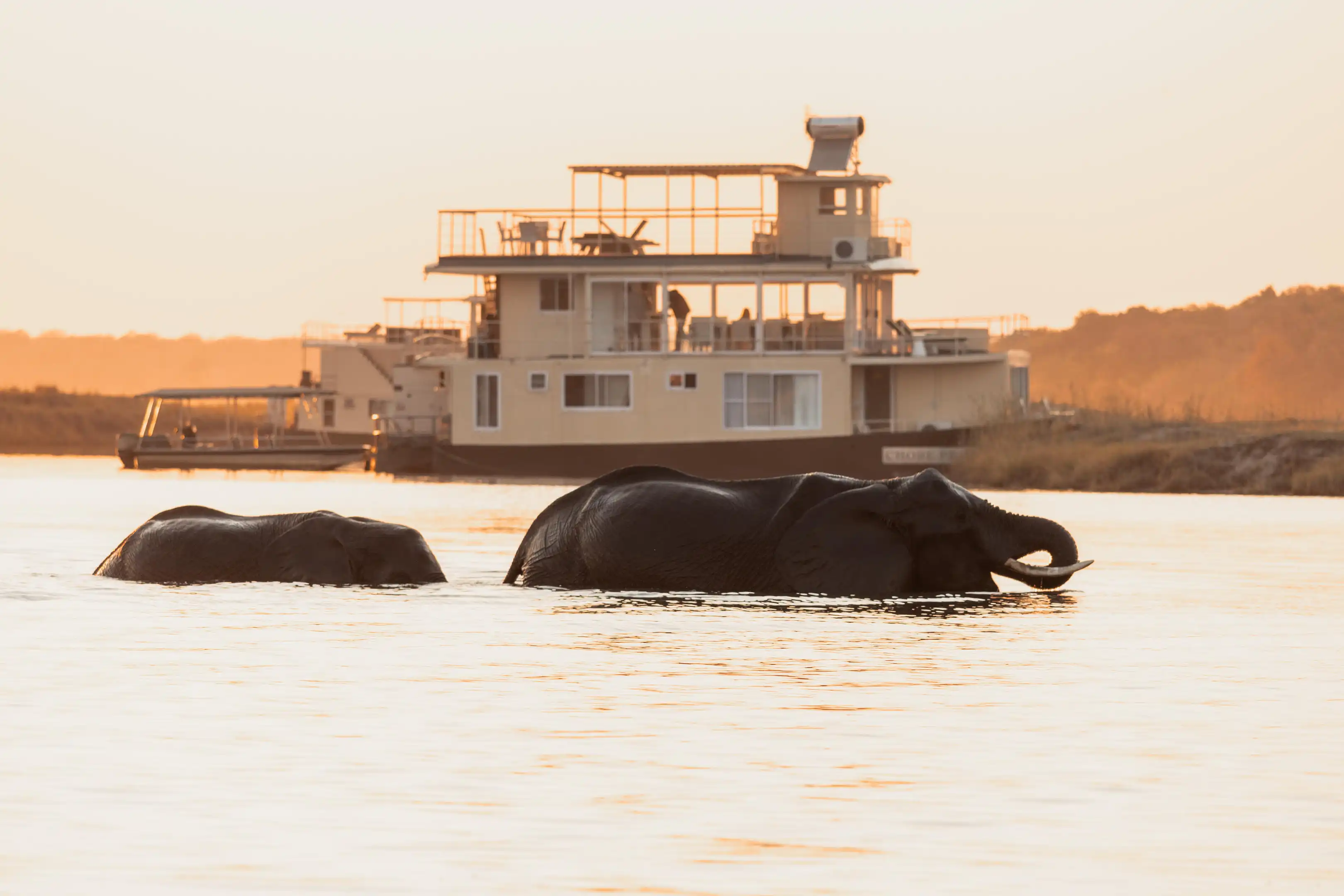
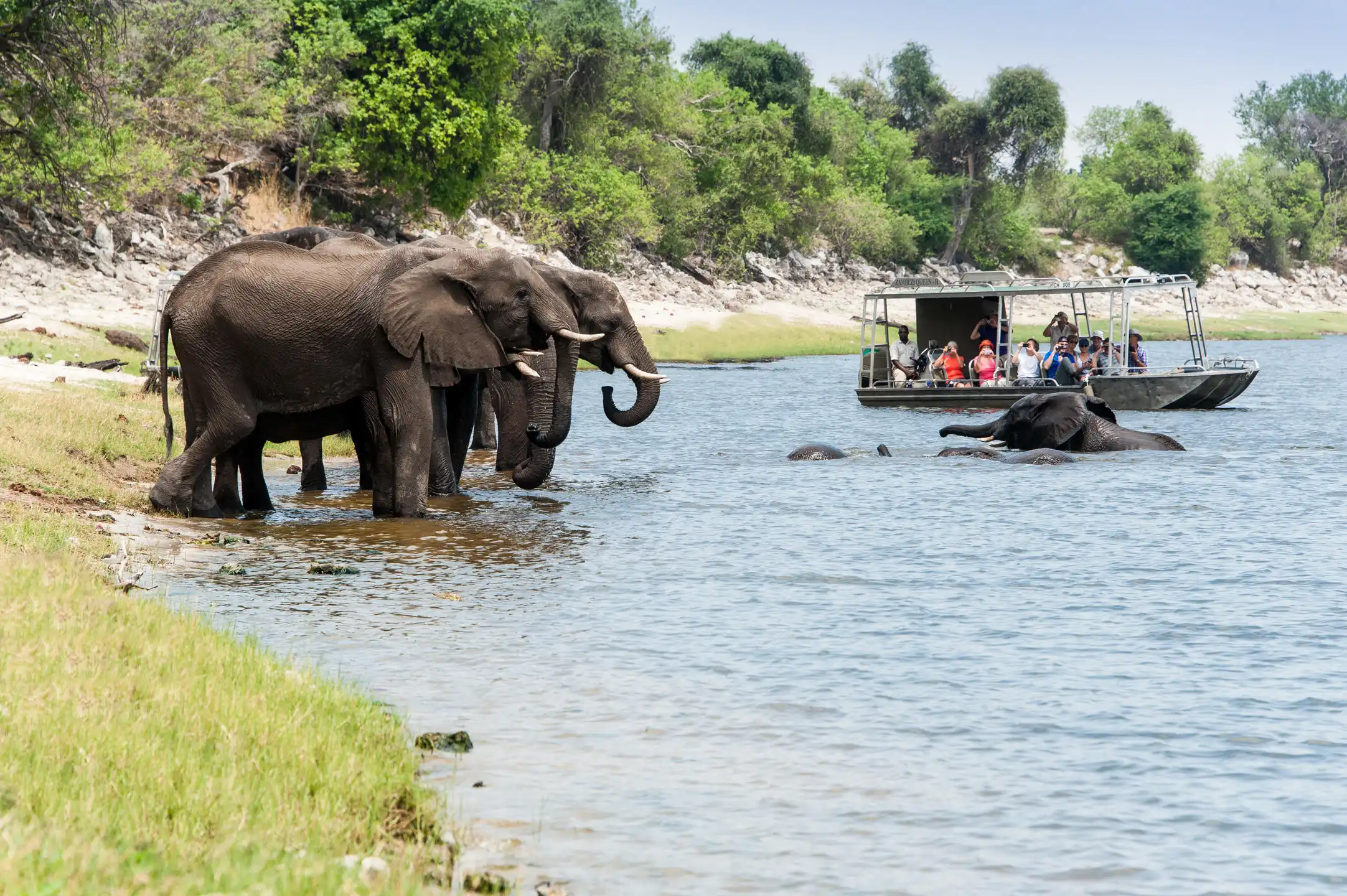
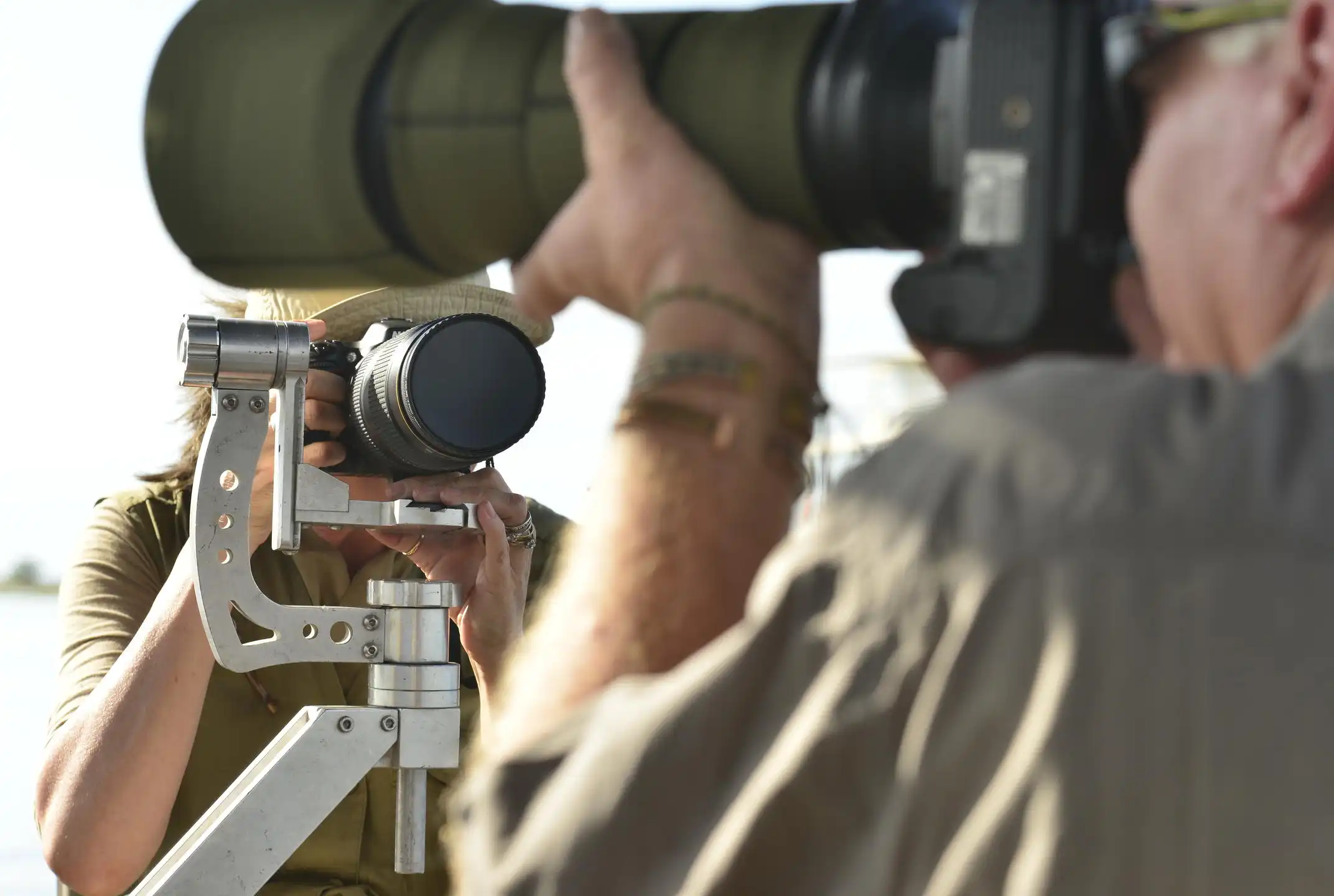
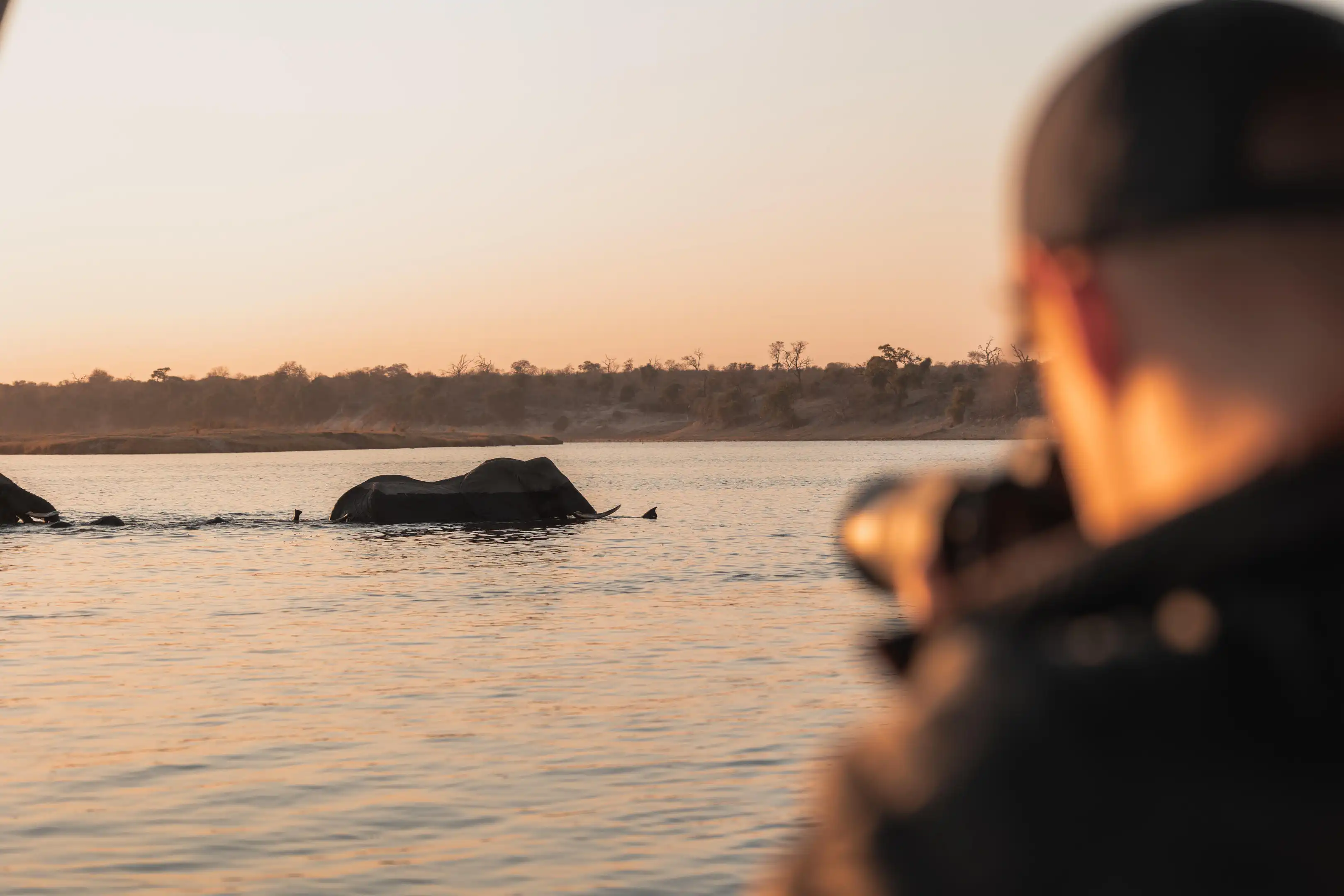

For photographers, Chobe offers extraordinary opportunities to capture wildlife both on land and from the water. Boat safaris along the river allow unique photographic perspectives, while traditional game drives across the park’s floodplains and woodlands reveal the incredible diversity of this iconic Botswana wilderness.
Best Time for a Chobe Photo Safari
Chobe National Park offers exceptional wildlife photography throughout the year, but the experience changes with the seasons. During the dry months, wildlife gathers along the Chobe River where animals concentrate around water and floodplains.
In the green season, the landscape transforms into lush vegetation filled with migratory birdlife and dramatic skies, offering photographers a completely different perspective of this iconic Botswana wilderness.
Early Dry Season
(May – July)
The early dry season brings cooler temperatures and increasing wildlife activity as animals begin gathering along the Chobe River.
- Wildlife starts concentrating along the riverfront
- Excellent light and comfortable temperatures
- Ideal conditions for game drives
- Cool dry weather (10–26°C / 50–79°F)
Best for:
Balanced wildlife viewing and photography
Peak Wildlife Season (August – September)
As water sources dry up inland, large numbers of animals gather along the Chobe River creating remarkable wildlife encounters.
- Massive elephant herds along
the river - Excellent predator activity
- High wildlife densities across the floodplains
- Warm dry conditions (18–33°C / 64–91°F)
Best for:
Peak wildlife viewing and elephant photography
Late Dry Season (October)
Late dry season conditions bring intense heat and extraordinary wildlife concentrations along the Chobe River.
- Extremely high wildlife density
- Dramatic riverfront wildlife encounters
- Dusty atmospheric photography
scenes - Very hot temperatures
(approx. 30–40°C / 86–104°F)
Best for:
Intense wildlife encounters and dramatic photography
Green Season Photo Safaris
(November – April)
The green season transforms Chobe into a vibrant landscape of tall grasses and seasonal wetlands. Migratory birds arrive in large numbers, young animals are often seen across the floodplains, and dramatic storm clouds create spectacular photographic opportunities.
Wildlife is more dispersed during this time, but photographers are rewarded with lush scenery, rich colours, and far fewer vehicles in the park.
- Lush green scenery across the floodplains
- Exceptional birdlife and migratory species
- Dramatic skies and vibrant photographic colour
- Warm wet conditions (20–34°C / 68–93°F)
Best for:
Bird photography, dramatic landscapes, and photographers seeking a quieter safari experience.
PHOTO SAFARI EXPERIENCES
Photo Safari Experiences in Chobe
Chobe National Park offers one of Botswana’s most dynamic safari experiences, combining traditional game drives with exceptional boat-based wildlife photography along the Chobe River. The park’s famous riverfront attracts large concentrations of wildlife, creating remarkable photographic opportunities throughout the year.
From elephants crossing the river at sunset to predators moving through the floodplains, Chobe provides photographers with constantly changing scenes and powerful wildlife encounters.
What You Can Expect:
Whether you’re returning from a game drive or drifting silently past hippos on a boat, your time in camp is designed to restore and elevate, not interrupt, the magical allure of the bush.
ICONIC WILDLIFE
Wildlife You Can Photograph in Chobe
Chobe National Park is one of Botswana’s most wildlife-rich regions, offering photographers exceptional opportunities to capture large mammals, predators, and prolific birdlife. The Chobe Riverfront in particular attracts remarkable concentrations of animals, creating extraordinary wildlife encounters throughout the year.

ELEPHANTS
African Elephants
Chobe is famous for its enormous elephant population, with huge herds regularly gathering along the Chobe River and surrounding floodplains.

Hippos and Crocodiles
The Chobe River supports large populations of hippos and crocodiles, offering excellent photographic opportunities during boat safaris.

Lions
Lions are frequently seen throughout Chobe, particularly near the riverfront and open floodplains where prey species gather.

Cape Buffalo
Large buffalo herds are common along the Chobe River, often forming dramatic scenes as they move across the floodplains.
Antelope and Giraffes
Giraffes, kudu, impala, and other antelope species are frequently encountered throughout Chobe’s woodland and savannah habitats.
Exceptional Bird Photography
Chobe is renowned for its birdlife, with fish eagles, bee-eaters, kingfishers, storks, and many migratory species regularly photographed along the river.
Chobe is also frequently combined with Okavango Delta and Hwange National Park, another outstanding destination for photographing African wildlife.
Safari Camps in Chobe for Photographic Safaris
Chobe National Park offers a range of exceptional safari camps located along the famous Chobe Riverfront. Many of these properties overlook the river itself, providing incredible wildlife viewing as elephants, buffalo, and other animals gather along the water’s edge.
Below are some of our preferred partner camps in Chobe that offer excellent access to wildlife and comfortable bases for photographic safaris.

Chobe Princess Houseboats
The Chobe Princess houseboats offer an intimate river safari experience, allowing guests to explore the Chobe River while photographing wildlife directly from the water.

Zambezi Queen
The Zambezi Queen is a luxury houseboat operating along the Chobe River, combining comfortable accommodation with exceptional boat-based wildlife photography opportunities.

Chobe Game Lodge
Chobe Game Lodge is the only permanent lodge located inside Chobe National Park, offering excellent access to wildlife along the famous riverfront.

Chobe Savanna Lodge
Chobe Savanna Lodge sits along the quieter eastern section of the Chobe River, providing excellent wildlife viewing and peaceful riverfront safari experiences.

Chobe River View Lodge
Chobe River View Lodge offers comfortable accommodation close to the park entrance, providing convenient access to Chobe’s riverfront wildlife areas.

Cresta Mowana Safari Resort
Cresta Mowana Lodge sits on the banks of the Chobe River near Kasane and offers easy access to both river safaris and game drives in the park.
Our Trusted Camp Partners – And Beyond
Chobe National Park is home to many outstanding safari camps and lodges. While the properties listed above are some of our preferred partners, we also work with a wider network of trusted camps throughout the region to match each safari itinerary to the right travel style and experience.
How to Get to Chobe National Park
Chobe National Park is easily accessed via Kasane Airport, which serves as the main gateway to the park. Located just outside the park boundary, Kasane provides quick access to many of Chobe’s riverfront safari camps and lodges.
Travellers can also reach Chobe from Victoria Falls in Zimbabwe, which is located approximately 90 minutes away by road. Charter flights are also available from major regional safari hubs such as Maun and Johannesburg, making Chobe an easy destination to include within a wider southern African safari itinerary.
Kasane Gateway
Kasane Airport serves as the primary gateway to Chobe National Park and sits just minutes from the park entrance and riverfront lodges.
Best for:
Fast access to Chobe
Victoria Falls Access
Chobe is easily combined with Victoria Falls, one of southern Africa’s most iconic travel destinations.
Best for:
Combining Chobe with Victoria Falls
Scenic Charter Flights
Private charter flights provide fast access to Chobe from other safari destinations across Botswana and southern Africa.
Best for:
Efficient regional travel
Typical Travel Times
We coordinate all internal flights and transfers as part of your safari itinerary.
“Chobe was incredible from a photography perspective, especially along the river. The concentration of elephants alone is something you have to see to believe. One afternoon we spent nearly an hour photographing a herd crossing the river at sunset, with the light reflecting off the water — easily one of the highlights of the whole photo safari. The guides understood exactly how to position the boat and vehicle so we could make the most of the moment.”
Camera Gear for a Chobe Photo Safari
PHOTOGRAPHY PREPARATION
A Chobe photo safari offers exceptional opportunities to photograph wildlife along the famous Chobe River as well as across the park’s floodplains and woodlands. From large elephant herds gathering at the riverfront to predators moving through the grasslands, photographers will encounter a wide range of subjects throughout the safari.
Bringing the right camera gear helps ensure you are prepared to capture these moments, whether photographing wildlife from a game vehicle or during a boat safari along the Chobe River.
Photography Tip
Boat safaris along the Chobe River provide unique photographic angles, often allowing photographers to capture wildlife at eye level as animals move along the riverbanks.
Plan Your Bespoke Chobe Safari
Every traveller experiences Chobe National Park differently, which is why we create bespoke safari itineraries tailored to your interests, travel style, and photographic goals. Whether you are looking for a dedicated photographic safari, a classic wildlife experience, or a wider Botswana itinerary that combines multiple destinations, we can design a journey that fits you.
From selecting the right safari camps and coordinating transfers to planning the best seasonal timing for wildlife photography, our team can help create a Chobe safari that feels seamless, personal, and deeply rewarding.
Chobe Photo Safari FAQs


“
“Chobe is a fantastic destination for a wildlife photo safari. The river setting creates such beautiful photographic opportunities, particularly in the early morning light. We had amazing chances to photograph elephants, buffalo, and birdlife right along the water’s edge. What we appreciated most was having the time to really work each scene rather than rushing between sightings.”
Markus & Anna
Arizona, USA
Plan Your Chobe Photo Safari
Chobe National Park is one of Botswana’s most spectacular wildlife destinations, offering photographers the chance to capture enormous elephant herds, dramatic riverfront wildlife encounters, and some of Africa’s richest birdlife.
Whether you are planning your first African photographic safari or returning to the continent to refine your craft, our team can help design a Chobe safari that combines exceptional guiding, carefully selected camps, and unforgettable wildlife experiences.
Many travellers choose to combine Chobe with other iconic destinations such as Victoria Falls, the Okavango Delta, or Savuti, creating a diverse and rewarding southern African safari itinerary.
