Photo Safari vs Traditional Safari

What Is a Photo Safari and Why Should You Go on One?
For many travellers, an African safari is about unforgettable wildlife encounters, beautiful landscapes, and time spent immersed in nature. But for photographers, not all safaris offer the same experience. While a traditional safari may be ideal for general game viewing and leisure travel, a dedicated photo safari is designed around the needs of people who want to create stronger wildlife images.
That distinction matters more than many first-time safari guests realise. The pace of the drive, the layout of the vehicle, the number of guests on board, the guide’s understanding of light and angles, and the amount of time spent at sightings can all have a huge impact on your photography.
If your goal is to return home with more than just snapshots, a photo safari is often the better option. It gives you the time, positioning, and support needed to capture wildlife behaviour, work with changing light, and improve your images in the field.
In this article, we’ll look at the difference between a photo safari and a traditional safari, why photographers often prefer specialist photographic safaris, and how to choose the right experience for your next trip to Africa.
Thinking About Your First Photo Safari?
Reading about photo safaris is a great place to start, but the real magic happens in the field. Our scheduled photo safaris are designed for photographers who want more than a standard game drive experience, with carefully chosen destinations, expert guidance, and time to focus on wildlife photography properly.
What a Photo Safari Is
A photo safari is a safari built specifically around wildlife photography.
Rather than focusing mainly on sightseeing or general wildlife viewing, a photo safari is designed to maximise photographic opportunities in the field. That influences everything from the structure of the itinerary to the type of vehicle used and the way guides approach sightings.
On a dedicated photographic safari, the day is often planned around the best light and the best wildlife activity. Early morning and late afternoon drives are treated as prime shooting windows. Guides are more likely to consider sun angle, background, behaviour, and positioning rather than simply getting close to an animal for a quick view.
Many photo safaris also include photography hosts or specialist safari guides who understand both wildlife behaviour and camera work. That can be especially valuable for hobbyist photographers who want help with settings, fieldcraft, composition, or simply getting more from their equipment while on safari.
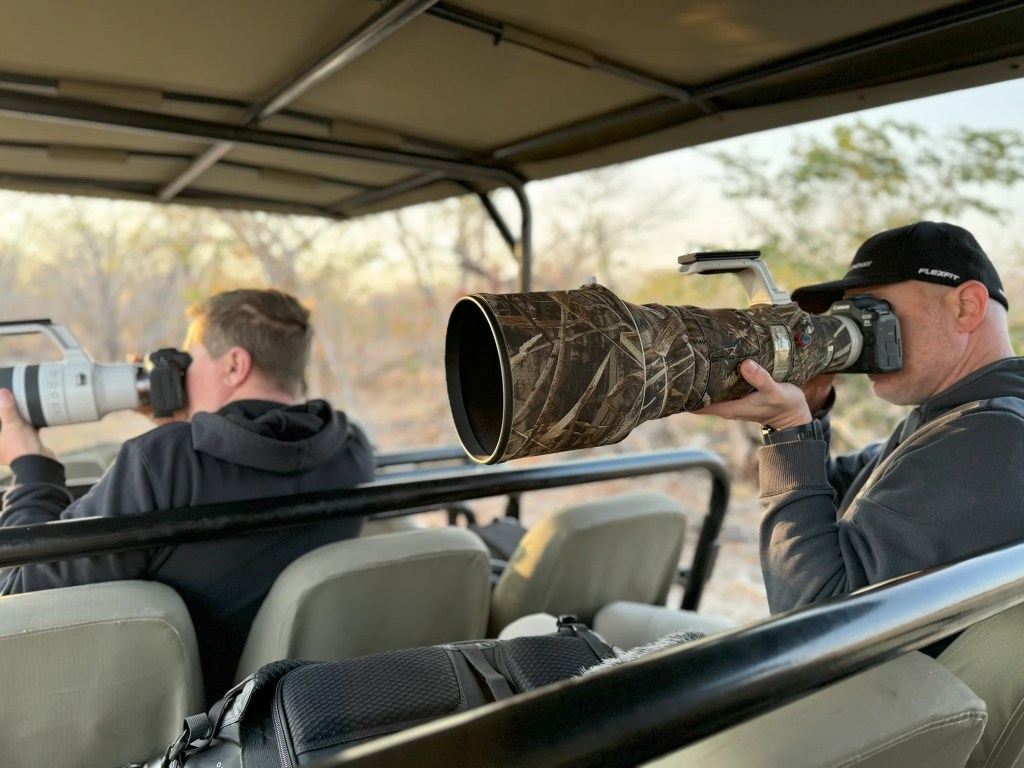
In practical terms, a photo safari often includes smaller groups, more space in the vehicle, more flexibility at sightings, and a shared focus among everyone on board. That creates a far better working environment for wildlife photographers than a standard mixed-interest safari.
A good photo safari is not only about seeing animals. It is about giving photographers the best chance to create meaningful images that capture behaviour, atmosphere, and a real sense of place.
Read our article on What Is a Photo Safari and Why Should You Go on One?
How Photo Safaris Differ From Traditional Safaris
A traditional safari is typically designed for a wide mix of travellers. Guests may be there for a honeymoon, a family holiday, a first visit to Africa, or a general wildlife experience. The safari is usually balanced around comfort, variety, and broad appeal.
A photo safari, by contrast, is more focused. It is built around the needs of photographers, and that changes the experience in several important ways.
More Time at Sightings
On a traditional safari, once everyone has had a good look at the animal, it is common to move on. On a photo safari, this is often when the real opportunity begins. Wildlife photographers know that the best image may come after several quiet minutes of waiting for a subject to turn, interact, hunt, stretch, or move into cleaner light.
That extra time can be the difference between a simple record shot and a photograph with impact.
Better Vehicle Positioning
On a dedicated photo safari, vehicle positioning is far more deliberate. A guide may reposition for cleaner backgrounds, a better shooting angle, better front light, or a lower-feeling perspective. Instead of asking only, “Can everyone see?”, the thinking becomes, “Can everyone photograph this well?”
That is a major difference.
Smaller Groups and More Space
Traditional safari vehicles may carry more guests, which works well enough for viewing. For photography, smaller groups are much better. More room means more freedom to move, easier access to both sides of the vehicle, and less frustration when action unfolds quickly.
For wildlife photographers carrying long lenses, second camera bodies, beanbags, batteries, and other gear, space matters.
A Photography-First Itinerary
A traditional safari often includes a broader holiday balance, with lodge time, transfer logistics, mixed activities, and a pace designed to suit all travellers. A photo safari is usually shaped more closely around wildlife photography opportunities.
That may mean choosing a camp in a region known for leopard sightings, bird photography, elephant behaviour, or open floodplain scenes. It may also mean adjusting drive timing to make the most of first light, golden hour, or specific animal behaviour patterns.

Why Photographers Choose Dedicated Photo Safaris
Photographers choose dedicated photo safaris because they want more than sightings. They want access to better moments and a better chance to turn those moments into strong images.
On a general safari, you may still see incredible wildlife. But seeing an animal and photographing it well are not the same thing. Wildlife photography depends on patience, positioning, timing, and often a fair bit of luck. A specialist safari improves the odds by creating the right conditions.
Another big reason photographers choose this style of safari is the shared mindset. Everyone in the vehicle is usually there for the same reason. That means less compromise and less tension between different expectations. Nobody is wondering why the guide is waiting for light to improve or why the vehicle has been sitting with the same pride of lions for half an hour.
There is also the benefit of field support. Many guests on photo safaris are enthusiastic hobbyists rather than professional photographers. They may know their camera fairly well but still need help understanding shutter speed choices, autofocus behaviour, exposure in difficult light, or how to anticipate wildlife movement.
Travelling with experienced photographic hosts can make a real difference. Small practical tips in the field often have an immediate impact. Something as simple as switching to a faster shutter speed before a bird takes off, using exposure compensation for a white egret, or framing wider to include more habitat can lift the quality of a portfolio very quickly.
For many photographers, a dedicated photo safari is not just a trip. It is part travel experience, part workshop, and part creative immersion.
Key Benefits for Wildlife Photographers
A dedicated wildlife photography safari offers several clear benefits for photographers who want better images and a more productive experience in Africa.
More Photographic Opportunities
Time is one of the biggest advantages. The more time you spend at quality sightings, the more chance you have of capturing behaviour, interaction, and mood. Wildlife rarely performs on cue. Great images often come from patience.
Better Conditions for Composition
Small changes in vehicle angle, background, or subject position can dramatically improve a photo. On a photo safari, guides are usually much more aware of those details. That helps photographers create cleaner, more intentional images rather than cluttered snapshots.
Access to Photography-Specific Guidance
A dedicated photographic safari often includes support that goes beyond wildlife viewing. Guests may receive help with shutter speed choices for birds in flight, autofocus settings for fast-moving subjects, exposing for high-contrast scenes, composition in busy bush environments, anticipating animal behaviour, and working creatively with dust, backlight, silhouettes, and reflections.
This sort of advice is incredibly valuable in real safari conditions.
A Stronger Learning Curve
For many people, one of the most rewarding parts of a photo safari is how much they improve during the trip. Each drive gives you a chance to put new ideas into practice. Reviewing images between drives, asking questions, and refining your technique can lead to noticeable progress even over a short safari.
Stay Inspired Between Safaris
Join the Photo Safari newsletter for safari stories, photography tips, destination inspiration, and updates on upcoming departures delivered straight to your inbox.
What Photographers Can Expect During a Photo Safari
A photo safari is immersive, exciting, and often more focused than many guests expect.
Most days begin early, because first light is one of the best times for wildlife photography. The air is cooler, animals are often more active, and the light is softer and more flattering. Morning drives are frequently followed by time back in camp for breakfast, rest, file backup, and image review before heading out again in the afternoon.
Photographers can also expect a stronger focus on wildlife behaviour. Instead of simply driving in search of as many species as possible, guides often spend more time reading the bush. Is the leopard becoming active? Are elephants moving toward water? Are the bee-eaters returning to a particular perch? Understanding behaviour creates better opportunities than rushing from sighting to sighting.
Be Ready to Adapt Quickly
Wildlife photography on safari changes fast. One minute you may be photographing a resting lion in soft shade, and the next you are trying to track a fish eagle taking off across the river. That means your settings need to be flexible and your camera needs to be ready.
Some useful field tips include keeping shutter speed high for moving wildlife, using faster settings for birds in flight when conditions allow, using continuous autofocus for moving subjects, using auto ISO in changing light, taking short controlled bursts instead of overshooting constantly, and watching your backgrounds as carefully as your subject.

Expect Different Types of Photography
A good photo safari is not only about tight portraits of lions and leopards. It may also include wider environmental images, bird photography, animal interactions, behaviour sequences, low-light mood, and storytelling moments around waterholes, dust, rain, or habitat.
The strongest safari portfolios usually come from variety.

Use Camp Time Well
Time in camp can be surprisingly productive. It is a chance to clean lenses, back up cards, review your work, ask questions, and reset your thinking for the next drive. Many photographers find that this rhythm of shooting, reviewing, and improving is one of the most satisfying parts of the experience.
Why Book Your Safari With Photo Safari Company
Planning an African safari is about more than choosing a destination and a lodge. The right safari should match your travel style, budget, interests, and the kind of experience you want to have in the field. That is where working with the right operator makes a real difference.
At Photo Safari Company, we help travellers build safaris that are thoughtful, well paced, and suited to what they actually want from Africa. Whether you are looking for a first-time safari, a luxury lodge journey, or a more photography-focused experience, we combine practical planning advice with real field knowledge to help you make confident decisions.
We understand that a safari is a major investment, both financially and emotionally. That is why we focus on clear guidance, trusted partners, honest advice, and helping you choose the right itinerary rather than simply selling you a generic trip. From destination selection and lodge matching to photography support and pre-travel planning, our goal is to make the entire process smoother and more rewarding.
If you want a safari that feels well considered from the start, booking with Photo Safari Company is a smart place to begin.

How to Choose the Right Photo Safari
Choosing the right photo safari can make a big difference to both your enjoyment and the quality of your images.
Choose the Right Destination for Your Interests
Different safari destinations offer different strengths. Some are known for predators, some for elephants, some for birdlife, and others for landscape-driven wildlife photography. Think about what you most want to photograph and choose a safari that aligns with that goal.
Consider the Season Carefully
Dry season often brings easier wildlife concentration and more predictable game viewing. Green season can bring richer colour, dramatic skies, migrant birds, and young animals. Neither is automatically better. It depends on what you want from your images.
Ask Who Is Hosting the Safari
The best photo safaris usually combine strong local guiding with an experienced photography host. That balance is valuable because it gives you both wildlife knowledge and photography-specific support in the field.
Match the Safari to Your Skill Level
You do not need to be an expert to enjoy a photo safari. Many are ideal for hobbyists and enthusiastic beginners. The important thing is to choose a departure that suits your experience, your photographic goals, and your expectations.

Final Thoughts on Photo Safari vs Traditional Safari
A photo safari and a traditional safari can both be outstanding ways to experience Africa, but they are designed with different goals in mind.
A traditional safari is ideal for travellers who want a broad wildlife experience, comfortable lodging, and the excitement of seeing iconic animals in beautiful places. A photo safari is more specialised. It is built for people who want time, space, expert support, and better conditions for creating strong wildlife images.
For photographers, that difference matters. Better vehicle positioning, smaller groups, more time at sightings, photography-aware guides, and an itinerary built around light and behaviour all contribute to a far more rewarding experience in the field.
If your priority is not just seeing wildlife but photographing it well, a dedicated photographic safari is often the smarter choice. It gives you the chance to improve your skills, capture more meaningful images, and enjoy a safari experience shaped around what photographers actually need.
At Photo Safari Company, our safaris are designed with wildlife photographers in mind. From carefully chosen destinations and small-group formats to photography-focused guiding and practical field support, we aim to help guests come away with more than just memories. We help them come away with images they are genuinely proud of.
Ready to Go on a Photo Safari?
If you want to experience Africa with more intention, stronger photographic opportunities, and expert support in the field, explore our upcoming departures and destination options.
Photo Safari vs Traditional Safari FAQs
Explore More South African and Safari Advice from Our Blog
Looking for more African safari stories, camera guides, and planning advice? Explore more from our blog:
Explore the full blog here: African Safari Blog
Hope to see you out on a photo safari soon.
Co-founder & Photography Host
About the Author
Nick Wigmore is Co-Founder, Director, and Photography Host at Photo Safari Company & Go Beyond Safaris. As a wildlife photographer and safari host, he works closely with photographers and travellers in the field and regularly advises guests on camera gear, practical setup, and how to get the most from their equipment in real safari conditions.