
Serengeti Photo Safaris in Tanzania
Photograph Africa’s Great Migration
Experience Serengeti National Park, where endless plains, dramatic predator encounters, and the Great Migration create one of Africa’s most iconic wildlife photography destinations.
Chobe National Park: Botswana’s Legendary
River Safari Destination
Serengeti National Park is one of Africa’s most iconic wildlife destinations and one of the finest places on Earth for a photographic safari. Its vast grasslands, granite kopjes, riverine woodlands, and seasonal plains create an extraordinary stage for wildlife photography throughout the year.
The Serengeti is best known for the Great Migration, where vast herds of wildebeest and zebra move across the ecosystem in search of fresh grazing, followed by predators such as lions, cheetahs, leopards, and hyenas. For photographers, this creates endless opportunities to capture behaviour, movement, scale, and raw wildlife drama.
Beyond the migration, the Serengeti offers exceptional year-round big cat photography, dramatic golden light, and diverse safari regions including the Central Serengeti, Northern Serengeti, Western Corridor, and Southern Plains. With the right timing and routing, every part of the Serengeti tells a different photographic story.
Key Facts for Photographers
Serengeti National Park
Serengeti National Park is one of Africa’s most important wildlife photography destinations, offering vast open plains, reliable predator sightings, and seasonal migration activity across a huge ecosystem. Its scale and diversity allow photographers to experience very different safari conditions depending on the region and time of year.
From the open southern plains to the river crossings of the north, the Serengeti delivers exceptional photographic opportunities for big cats, migration herds, dramatic landscapes, and classic East African safari scenes.
Year-Round, Region Dependent
Best Time To Visit – (Dry Season)
Serengeti Photo Safari: At a Glance
Home of the Great Migration
The Serengeti hosts the Great Migration, where vast wildebeest and zebra herds move across the plains in search of fresh grazing.
Vast Open Plains
The Serengeti’s open grasslands create clean backgrounds, dramatic skies, and beautiful opportunities for classic East African wildlife photography scenes.
Exceptional Big Cat Photography
Lions, cheetahs, and leopards are regularly photographed across the Serengeti, making it one of Africa’s finest big cat destinations.
Outstanding Birdlife
With more than 500 recorded bird species, the Serengeti offers excellent bird photography throughout the year, especially in green season.
Diverse Safari Regions
From the Southern Plains to the Northern Serengeti, each region offers different wildlife encounters, landscapes, and seasonal photo opportunities.
Year-Round Photography
The Serengeti offers strong photographic opportunities year-round, with the best region depending on migration movement, rainfall, and wildlife activity.
Why Choose a Serengeti Photo Safari

The Serengeti is one of Africa’s most iconic photographic safari destinations, offering vast open landscapes, reliable big cat encounters, and the ever-changing drama of the Great Migration. For photographers, it delivers an exceptional mix of scale, movement, behaviour, and classic East African light.
From predator action on the plains to river crossings in the north, each region of the Serengeti offers a different photographic story.
The Great Migration
The Serengeti offers unmatched opportunities to photograph the Great Migration, from vast grazing herds to dramatic river crossings and predator interactions.
Exceptional Big Cat Encounters
Lions, cheetahs, and leopards are regularly photographed across the Serengeti, making it one of Africa’s strongest big cat photography destinations.
Clean Open Landscapes
The Serengeti’s vast plains provide clean backgrounds, dramatic skies, and excellent separation between wildlife subjects and their surrounding environment.
Year-Round Regional Variety
Different Serengeti regions peak at different times, allowing photographers to target migration movement, calving season, river crossings, or resident predators.
Small-Group Photo Safaris
Our small-group photo safaris provide greater flexibility, more time at sightings, and better positioning for light, behaviour, and composition.
Hand-Picked Safari Camps
We partner with carefully selected Serengeti camps that offer strong wildlife access, expert guiding, and comfortable bases for photographic safaris.
Serengeti’s Wildlife & Landscapes
Serengeti National Park is defined by its vast open plains, scattered acacia woodlands, granite kopjes, and seasonal river systems that shape one of Africa’s most dynamic ecosystems. These diverse landscapes support extraordinary wildlife densities and create ideal conditions for photography across a wide range of habitats.
The movement of the Great Migration defines much of the Serengeti’s wildlife activity, with wildebeest and zebra travelling across the ecosystem in response to rainfall and grazing conditions. Predators such as lions, cheetahs, and hyenas follow these herds, creating dramatic and highly photogenic wildlife encounters.


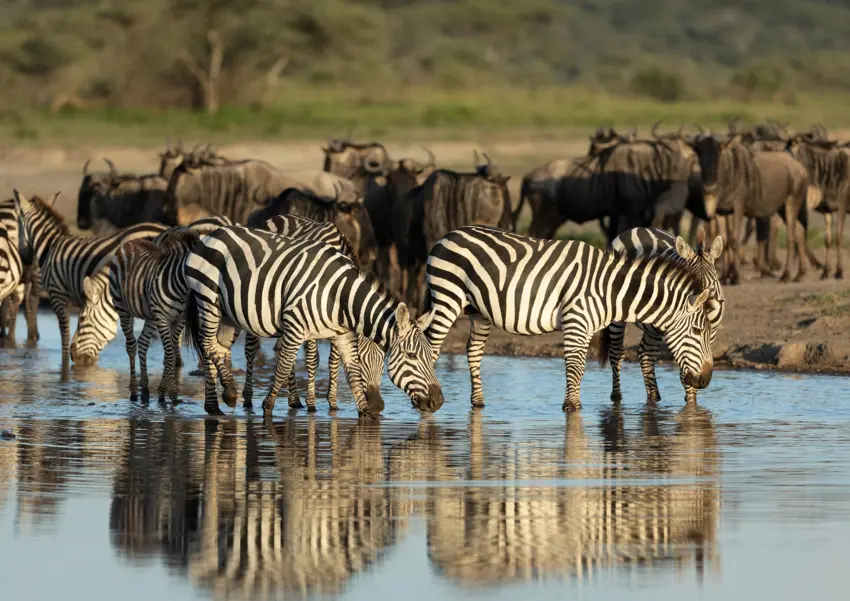
For photographers, the Serengeti offers a unique combination of scale and simplicity. Endless plains provide clean compositions, while kopjes and river crossings add texture, behaviour, and storytelling opportunities throughout the year.
Best Time for a Serengeti Photo Safari
The Serengeti is a year-round photographic safari destination, but the best region depends on rainfall, grazing patterns, and the movement of the Great Migration. Each season offers a different photographic focus, from calving season on the southern plains to river crossings in the north.
For photographers, timing your Serengeti safari around the right region is just as important as choosing the right month.
Calving Season (January – March)
The southern Serengeti plains come alive as wildebeest give birth, attracting predators and creating exceptional opportunities for wildlife photography.
- Wildebeest calving across the southern plains
- Excellent cheetah and predator
activity - Green landscapes and dramatic skies
- Warm conditions
(20–30°C / 68–86°F)
Best for:
Calving season, predators, and dramatic green-season photography
Migration Movement (April – June)
As the rains shift, migration herds begin moving north and west, creating dramatic scenes across the central and western Serengeti.
- Large herds moving through central regions
- Western Corridor migration activity
- Excellent predator and plains photography
- Mild to warm conditions
(18–29°C / 64–84°F)
Best for:
Migration movement and classic Serengeti plains photography
River Crossings
(July – October
The northern Serengeti becomes the main focus as migration herds gather near river systems, creating dramatic crossing opportunities.
- Mara River crossing opportunities
- Strong predator activity in northern regions
- Dry-season landscapes and clear
light - Warm dry conditions
(18–30°C / 64–86°F)
Best for:
River crossings, migration drama, and predator photography
Green Season Photo Safaris
(November – December)
The short rains begin to refresh the Serengeti, bringing vibrant landscapes, dramatic skies, and excellent conditions for bird photography. Migratory birds arrive, newborn wildlife begins appearing, and the plains take on a softer, greener look.
While migration movement varies with rainfall, this period can offer beautiful photographic conditions, fewer vehicles, and excellent resident wildlife sightings.
- Fresh green landscapes and dramatic skies
- Excellent birdlife and migratory species
- Strong resident predator sightings
- Warm conditions (20–30°C / 68–86°F)
Best for:
Bird photography, landscapes, and quieter Serengeti safaris
PHOTO SAFARI EXPERIENCES
Photo Safari Experiences in the Serengeti
The Serengeti offers one of the most iconic safari experiences in Africa, combining vast landscapes with extraordinary wildlife encounters. From tracking big cats across open plains to positioning for Great Migration moments, photographers have the opportunity to capture dynamic and powerful scenes throughout the year.
Whether focusing on predator behaviour, migration movement, or classic East African landscapes, the Serengeti provides an endlessly rewarding photographic environment.
What You Can Expect:
Whether you’re returning from a game drive or relaxing around the pool, your time in camp is designed to restore and elevate, not interrupt, the magical allure of the bush.
ICONIC WILDLIFE
Wildlife You Can Photograph in the Serengeti
The Serengeti is one of Africa’s most rewarding destinations for wildlife photography, offering everything from big cat encounters to vast migration scenes. Its open plains, kopjes, woodlands, and seasonal rivers create exceptional opportunities to photograph behaviour, movement, and classic East African wildlife.

Lions
The Serengeti is famous for its lion prides, often seen across open plains, around kopjes, and near migration herds throughout the year.

Cheetahs
Cheetahs are regularly photographed on the open plains, where clean backgrounds and wide landscapes create excellent opportunities for action and environmental portraits.

Leopards
Leopards are often seen in riverine woodland and around rocky kopjes, offering beautiful opportunities for more intimate predator photography.

Wildebeest and Zebra
The Serengeti’s migration herds create extraordinary photographic scenes, from grazing plains to river crossings and predator interactions.

BIG GAME
African Elephants
Elephants move through the Serengeti’s woodlands and plains, offering strong opportunities for classic wildlife portraits and wider landscape images.
Exceptional Bird Photography
With more than 500 recorded bird species, the Serengeti offers excellent bird photography, especially during the green season and migration periods.
Serengeti is also frequently combined with Masai Mara and Zanzibar, other outstanding destinations for photographing African wildlife.
Safari Camps in the Serengeti for Photographic Safaris
The Serengeti offers an exceptional range of safari camps positioned across its key wildlife regions, from the Southern Plains and Central Serengeti to the Northern Serengeti. Selecting the right camp is essential, as location directly influences wildlife sightings, migration access, and photographic opportunities.
Below are some of our preferred Serengeti camp partners, chosen for their location, guiding quality, and ability to deliver outstanding photographic safari experiences.

Wilderness Usawa Serengeti
Usawa Serengeti is a mobile safari experience designed to follow seasonal wildlife movement, placing photographers close to key Serengeti action.

Asilia — Olakira Migration Camp
Olakira Migration Camp moves seasonally with the Great Migration, offering strong access to wildebeest herds, predators, and dramatic migration photography.

Asilia — Sayari Camp
Sayari Camp is located in the Northern Serengeti, making it ideal for Mara River crossings, predator sightings, and migration season photography.

Wellworth — Ole Serai Luxury Camp Seronera
Ole Serai Seronera offers a comfortable base in the Central Serengeti, with excellent access to big cats and year-round wildlife photography.

Wellworth — Ole Serai Luxury Camp Kogatende
Ole Serai Kogatende is well positioned in the Northern Serengeti, providing access to migration routes, river systems, and seasonal wildlife movement.

Wellworth — Ole Serai Luxury Camp Moru Kopjes
Ole Serai Moru Kopjes places guests near iconic granite kopjes, offering excellent opportunities for lions, landscapes, and classic Serengeti photography.
Our Trusted Camp Partners – And Beyond
While the camps listed above are some of our preferred Serengeti partners, they represent only a small selection of the outstanding camps found throughout the ecosystem.
We work with a wider network of trusted lodges and camps across the Serengeti to ensure each itinerary is aligned with the best locations, seasonal conditions, and photographic goals.
How to Get to the Serengeti
The Serengeti is accessed via Kilimanjaro International Airport (JRO) or Arusha Airport (ARK), both of which serve as the main gateways for safaris in northern Tanzania. From here, guests typically connect by scheduled light aircraft or private charter flight directly into the Serengeti.
With multiple airstrips located across the park, flights allow easy access to the Central Serengeti, Northern Serengeti, and Southern Plains, depending on the time of year and migration movement.
Fly via Kilimanjaro or Arusha
Most travellers arrive into Kilimanjaro International Airport or Arusha before continuing onward to the Serengeti by light aircraft.
Best for:
International travellers arriving in Tanzania
Scheduled & Charter Flights
Light aircraft flights connect Arusha and other safari destinations directly to multiple Serengeti airstrips across the ecosystem.
Best for:
Fast access to remote Serengeti locations
Seamless Camp Transfers
On arrival at your Serengeti airstrip, camp guides meet guests and transfer them directly to camp, often with wildlife sightings along the way.
Best for:
A seamless and stress-free arrival
Typical Travel Times
We coordinate all internal flights and transfers as part of your safari itinerary.
“The Serengeti is exactly what you want from a photo safari. The scale of it, the wildlife, the light — it all just works. We spent a few sessions with the migration and having the time to actually photograph behaviour, not just the movement, made a big difference. The guide was excellent at positioning the vehicle so we could shoot clean backgrounds and make the most of the conditions.”
Camera Gear for a Serengeti Photo Safari
PHOTOGRAPHY PREPARATION
A Serengeti photo safari offers exceptional opportunities to photograph big cats, migration herds, dramatic landscapes, and classic East African wildlife behaviour. While timing, patience, and positioning are essential, bringing the right camera gear helps photographers make the most of every encounter.
Most photographers travel with a combination of telephoto lenses for wildlife and shorter focal lengths for environmental images that capture the scale and beauty of the Serengeti plains.
Photography Tip
Early mornings and late afternoons provide the best light in the Serengeti. Being ready during these golden hours often leads to the most rewarding wildlife photographs.
Plan Your Bespoke Serengeti Safari
Every traveller experiences the Serengeti differently, which is why we create bespoke safari itineraries tailored to your interests, travel style, timing, and photographic goals. Whether you want to follow the Great Migration, focus on big cats, or combine multiple Tanzanian safari regions, we can design a journey that fits you.
From selecting the right camps and planning regional movements to arranging internal flights and seasonal logistics, our team can help create a Serengeti safari that feels seamless, personal, and deeply rewarding.
Serengeti Photo Safari FAQs


“
“The Serengeti gave us some of our strongest images from the whole trip. Between the open plains and consistent wildlife, there are endless opportunities to shoot. What stood out was the patience — we weren’t rushed from sighting to sighting, which meant we could really focus on composition and timing. It felt like a proper photographic safari, not just a standard game drive.”
Marco & elena
Milan Italy
Plan Your Serengeti Photo Safari
The Serengeti remains one of Africa’s most iconic wildlife destinations, offering photographers the opportunity to capture the Great Migration, big cat encounters, and vast open landscapes in one extraordinary ecosystem.
Whether you are planning your first African photographic safari or returning to refine your craft, our team can design a Serengeti experience that combines exceptional guiding, carefully selected camps, and unforgettable wildlife moments.
Many travellers choose to combine the Serengeti with other destinations such as Ngorongoro Crater, Tarangire National Park, or Zanzibar, creating a diverse and rewarding East African safari itinerary.