Best Time to Photograph the Great Migration: A Month-by-Month Guide
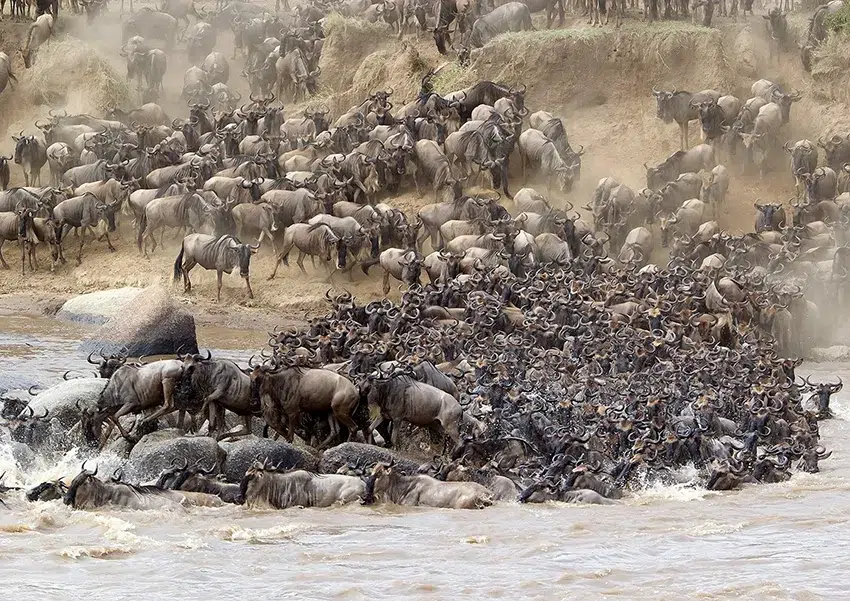
The best time to photograph the Great Migration depends on the images you want to create. Calving, predator activity, vast travelling herds and dramatic river crossings all take place at different stages of the annual movement through Tanzania’s Serengeti and Kenya’s Maasai Mara ecosystems.
January and February are usually associated with calving on the southern Serengeti and Ndutu plains, while July through October provides the strongest opportunity to photograph the herds in the northern Serengeti and Maasai Mara. River crossings receive most of the attention, but they are unpredictable and represent only one part of a much larger wildlife story.
This month-by-month guide explains where the migration is generally expected to be, which behaviours may be photographed and how light, vegetation, weather and visitor numbers can affect the experience. It will help you choose a travel period based on your photographic priorities rather than chasing a single event that can never be guaranteed.
Planning a Great Migration Photo Safari?
A successful migration safari starts with matching the travel dates and location to the wildlife behaviour, photographic conditions and style of experience you want in the field.
Why Timing Matters for Great Migration Photography
The Great Migration is a continuous annual movement rather than a single event. Wildebeest, zebra and other grazing animals move through the Serengeti–Mara ecosystem in response to rainfall, grazing conditions and access to water. The herds do not follow an exact timetable, which means the best travel dates depend on the type of wildlife behaviour and photographic environment you want to experience.
Photographers interested in newborn animals, predator interactions and expansive green plains will usually favour the southern Serengeti and Ndutu during the calving period. Those hoping to photograph dense herds, dust, river approaches and potential crossings are more likely to consider the northern Serengeti or Maasai Mara between July and October.
Timing also changes the visual character of the landscape. Green-season conditions can provide softer backgrounds, dramatic skies and colourful vegetation, while the dry season often produces dust, warm tones and more open views. Neither is automatically better. Each creates a different style of image and requires a different approach in the field.
Camp location is just as important as the month of travel. Staying close to the expected position of the herds reduces long transfers and gives photographers more time during the best morning and afternoon light. A well-designed migration itinerary therefore follows likely wildlife movement while allowing enough flexibility for changing conditions.
Key Factors Photographers Should Consider
Wildlife Behaviour and Concentration
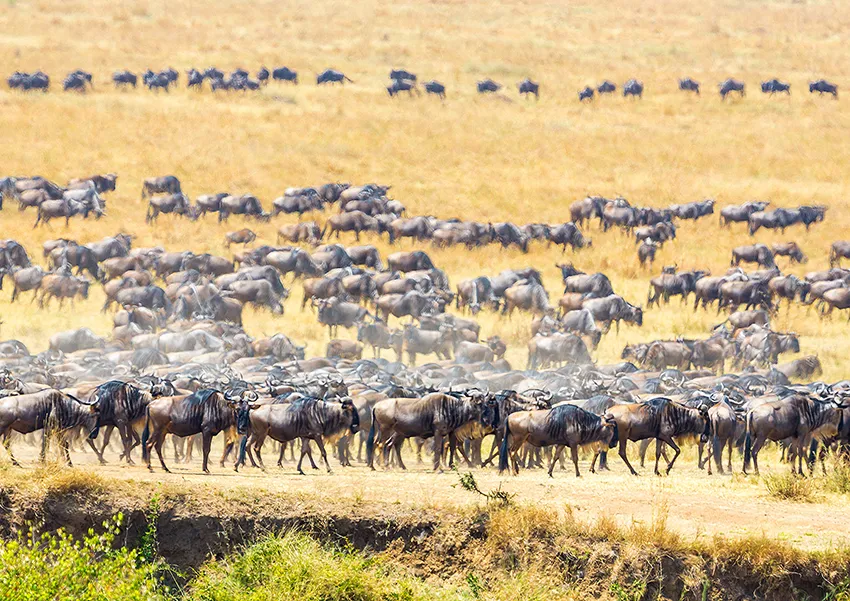
The migration offers more than photographs of large herds moving across open plains. Different stages create opportunities to document calving, nursing, courtship, territorial behaviour, predator interactions, river approaches and the constant movement of animals searching for fresh grazing.
Dense concentrations of wildebeest can produce powerful wide-angle scenes, but the strongest migration portfolios usually include smaller moments as well. Newborn calves, zebras interacting within mixed herds, lions watching from cover and animals hesitating at a riverbank can tell more of the story than a single dramatic crossing.
Light Quality and Atmosphere
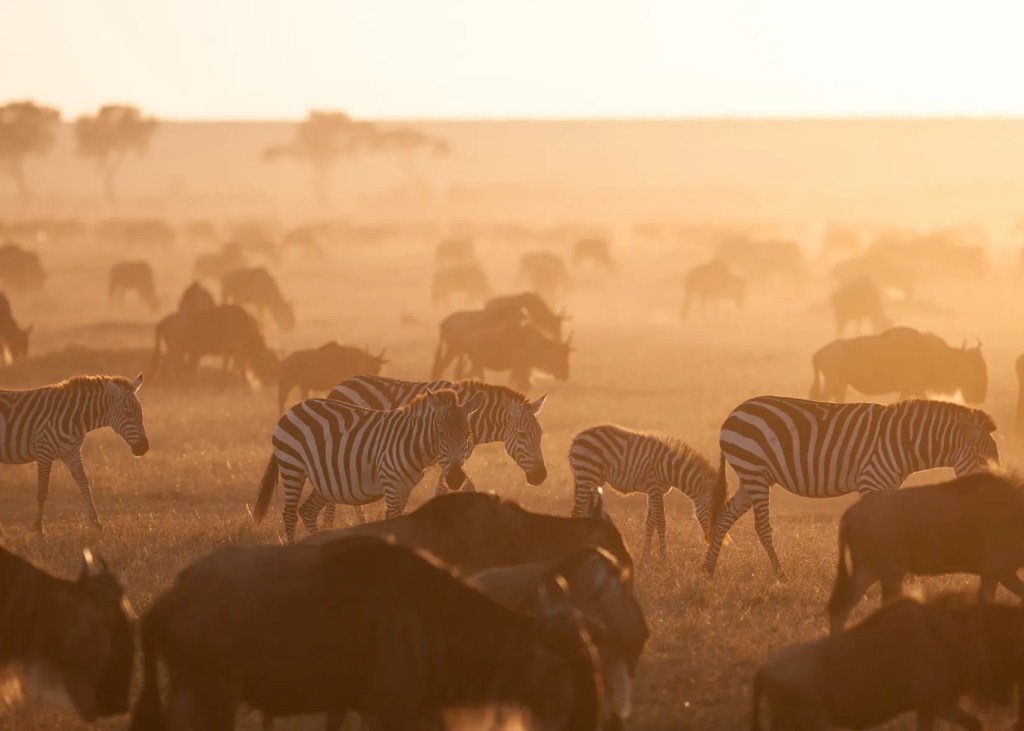
Early mornings and late afternoons generally provide the most flattering light, but each migration period has its own atmosphere. Green-season skies can produce soft light, shafts of sunlight and dramatic storm backgrounds. Drier months are more likely to create dust, warm colour and strong backlit silhouettes.
Photographers should also consider how long they can remain in the field during the best light. A camp that is poorly positioned relative to the herds may require an early departure and a long drive before photography begins, reducing the value of an otherwise well-timed visit.
Vegetation and Backgrounds
The southern plains during the calving period can offer low green grass, clean horizons and space to photograph animals within the landscape. As the dry season develops, vegetation becomes shorter and more muted, often making wildlife easier to isolate against uncluttered backgrounds.
Long grass can make photography more challenging, particularly with calves, smaller predators and animals lying down. It can also create depth, texture and concealment. Rather than treating vegetation as an obstacle, photographers can use it to frame subjects, simplify distracting foregrounds and show how animals move through their habitat.
Birdlife and Seasonal Variety
A migration safari should not be approached as though wildebeest are the only available subject. Eagles, vultures, storks, bustards, rollers and other birds can provide excellent opportunities between major herd encounters. Wet-season conditions can be especially rewarding for colour, breeding plumage and wider species variety.
Remaining open to birds, landscapes, predators and smaller wildlife produces a more complete photographic record of the ecosystem. It also prevents the success of the safari from depending entirely on whether one anticipated crossing or mass movement occurs.
Comfort and Field Conditions
Rain, heat, dust and vehicle traffic all influence the experience. The calving season may bring wet roads, sudden storms and muddy conditions, while the peak river-crossing months can be dry, dusty and busy around well-known access points.
For photographers, vehicle configuration and group size are often as important as the weather. Space to move, a clear line of sight and a guide who understands light and positioning can have a greater effect on the final images than simply travelling during the most famous month.
The Great Migration Month by Month
The month-by-month pattern below is a planning guide rather than a fixed schedule. Rainfall determines where fresh grazing and water are available, so the herds can arrive early, remain longer than expected or divide into several groups across the ecosystem.
January: Southern Serengeti and Ndutu
By January, substantial numbers of wildebeest are usually gathering across the short-grass plains of the southern Serengeti and Ndutu region. Calving may already be underway, although the main concentration of births is more commonly associated with the weeks that follow. Photographically, January can provide green landscapes, dramatic skies, scattered herds and opportunities to work with newborn animals without relying on one specific event.
February: Peak Calving Photography
February is generally the strongest month for photographing the calving season. Large numbers of calves can create opportunities to document first steps, nursing, herd protection and predator-prey interaction. The low grass and open plains often provide clean backgrounds, although rain, mud and rapidly changing weather remain part of the experience.
March: Calves, Predators and Dispersing Herds
Many calves are stronger and more mobile by March, while the herds may begin dispersing as grazing conditions change. Photographers can still find excellent family behaviour and predator activity, but sightings may be spread over a wider area. Green plains, cloud formations and fewer peak-season vehicles can make March particularly appealing to photographers who value atmosphere as much as density.
April: Green-Season Movement Through the Serengeti
During April, the migration generally begins moving away from the southern plains and into central or western parts of the Serengeti. This period can bring heavier rain, difficult roads and less predictable access, but it also produces rich colour, dramatic weather and comparatively quiet wildlife areas. It suits photographers who accept logistical uncertainty in return for fewer vehicles and a greener landscape.
May: Western and Central Serengeti
As the herds continue west and north, long columns of wildebeest may be photographed moving through the Serengeti. May is not usually chosen for famous river-crossing scenes, but it can produce powerful images of migration as movement: animals stretching across the landscape, gathering under storm clouds and passing through varied habitats.
June: Western Corridor and Northward Movement
June is a transition month as conditions become drier and portions of the migration move through the western corridor or continue towards northern Serengeti. Grumeti-area river activity may occur, but it should not be viewed as a guaranteed equivalent to the later Mara River crossings. Photographers may find rutting behaviour, large moving groups and increasingly dusty conditions.
July: Northern Serengeti and Early River-Crossing Opportunities
By July, increasing numbers of wildebeest are commonly found in the northern Serengeti, and early Mara River crossings may occur when the herds reach the river. The photographic potential is high, but movement can remain fragmented. Some groups may still be further south while others approach Kenya, so camp placement and up-to-date field information are essential.
August: Northern Serengeti and Maasai Mara
August is one of the most popular months for migration photography. Herds may be distributed between northern Tanzania and Kenya’s Maasai Mara ecosystem, with river crossings possible in several locations. The trade-off is increased vehicle pressure around known crossing points, making responsible guiding, patience and thoughtful positioning especially important.
September: Dry-Season Herds and Continuing Crossings
September often combines dry conditions, strong herd concentrations and continuing movement across the northern Serengeti and Maasai Mara. Crossings can take place in either direction as groups respond to local grazing and rainfall. Dust, golden grass and predator activity offer opportunities beyond the river, while visitor numbers can remain high.
October: Late Northern-Season Photography
October can still provide excellent northern migration photography, including possible late crossings. As short rains begin to influence grazing further south, sections of the migration may start leaving Kenya or moving through eastern and northern Serengeti. It is a useful period for travellers who want migration activity but are prepared for the herds to be more widely dispersed.
November: The Return South
The short rains commonly encourage the migration to move south through eastern and central Serengeti. November can offer lower visitor numbers, fresh colour and long lines of animals travelling across the plains. The precise route varies considerably, so mobile or carefully positioned seasonal camps can be valuable.
December: Green Plains and the Approach to Calving Season
By December, many herds are returning to central and southern areas of the Serengeti as grazing improves. The landscape becomes greener and the migration begins settling into the wider calving-season region. December can produce atmospheric herd photography, although the concentrated birthing activity associated with peak calving is generally still ahead.
Recommended Gear and Preparation for Great Migration Photography
Camera Bodies
A camera with dependable autofocus, a responsive burst rate and good high-ISO performance is useful for migration photography. Fast action can unfold suddenly, while predators and riverbank activity may begin in poor early-morning light. Two camera bodies are helpful when practical because they allow photographers to move between wide and telephoto compositions without changing lenses in dusty conditions.
Lenses
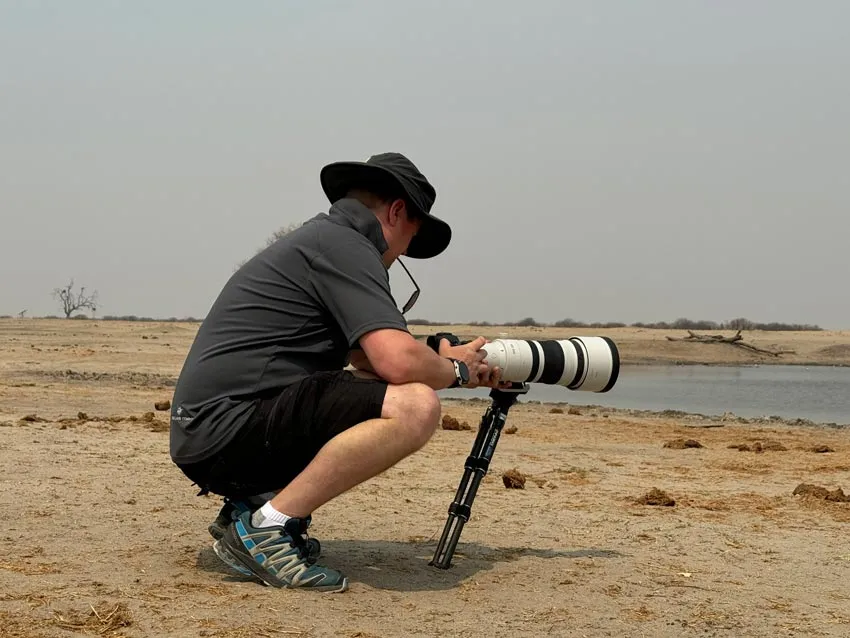
A flexible telephoto zoom, such as a 100–500mm, 200–600mm or equivalent, works well for individual animals, predators and rapidly changing distances. A 70–200mm or 100–400mm can be extremely useful when herds approach the vehicle or when several animals need to fit within the frame. Carrying a wider lens allows you to photograph the scale of the landscape, storm skies, dust and animals moving through the wider ecosystem.
Support and Protection
A beanbag is often the simplest and most effective support inside a safari vehicle. Bring lens cloths, a blower, protective covers and an accessible dry bag for sudden rain. Dust can be severe during the northern dry season, while the calving period may involve wet roads and heavy showers. Batteries and memory cards should be prepared before every drive because extended behaviour can produce large bursts of images.
Clothing and Mindset
Pack layered neutral clothing for cold mornings, warm afternoons and rapid weather changes. More importantly, arrive with realistic expectations. The migration is natural, unscripted and driven by conditions outside anyone’s control. A patient photographer who is willing to work with the behaviour available will generally return with a stronger and more varied set of images than someone focused only on witnessing a river crossing.
Practical Tips From Experienced Safari Photographers
Choose the behaviour before choosing the month. Decide whether your priority is calving, predators, travelling herds, green landscapes, dust or river activity. This creates a much clearer planning framework than simply asking for the most famous period.
Spend enough time in the right area. A short stay can be affected by one storm, one quiet day or a sudden change in herd position. Several nights in a well-chosen camp provide more opportunities to adapt to conditions and revisit productive areas in different light.
Watch the direction of movement. Herds often show subtle signs before changing pace or direction. Raised heads, increased vocalisation, animals bunching together and individuals beginning to move can indicate that a larger group may follow. Anticipating movement gives the guide time to position the vehicle without chasing the animals.
Build a complete visual story. Photograph wide landscapes, portraits, herd patterns, tracks, weather, predators, birds and smaller behavioural moments. A varied portfolio will communicate the migration more effectively than hundreds of similar frames of running wildebeest.
Work with the guide rather than only reacting to sightings. Explain whether you want front light, backlight, environmental compositions or behaviour. A photography-aware guide can consider sun direction, backgrounds, vehicle movement and the likely path of the animals before the action develops.
Common Mistakes to Avoid
Choosing Only on Price
A lower-priced camp can become poor value if it is far from the likely position of the migration or requires long daily drives. Compare location, vehicle occupancy, guiding, time in the field and transfer arrangements rather than looking only at the nightly rate.
Ignoring Seasonality
The migration cannot be photographed from every part of the Serengeti or Maasai Mara throughout the year. Booking a famous destination without matching the region to the expected herd movement can leave you several hours from the most productive area.
Packing for the Wrong Conditions
Calving-season travel may require rain protection and footwear suitable for mud, while northern dry-season safaris demand careful dust management. Cold early mornings are possible in both Kenya and Tanzania, even when daytime temperatures become warm.
Trying to Cover Too Much
Moving between too many regions can reduce the time available for photography. It is often better to spend several nights in one or two productive migration areas than to build an itinerary around constant packing, flights and long road transfers.
Moving on Before Behaviour Develops
A quiet herd can become active with little warning. Animals may begin moving, predators may appear or light may improve within minutes. A dedicated photo safari allows photographers to remain at promising situations rather than moving on as soon as the initial sighting has been recorded.
Choosing the Best Time for Your Great Migration Photography
There is no single month that is best for every Great Migration photographer. February is particularly strong for calving and predator interaction, while July through October provides the greatest opportunity to photograph the migration in northern Serengeti and Maasai Mara. The quieter transitional periods can offer fewer vehicles, dramatic weather and a stronger sense of movement through the wider ecosystem.
The right choice comes from matching the dates, camp location and safari format to your photographic priorities. Plan for the behaviour you want to document, allow enough time for conditions to change and treat any river crossing as a possible highlight rather than the only measure of a successful migration safari.
Ready to Plan Your Great Migration Photo Safari?
We can help match your travel dates, route and camp locations to the wildlife behaviour and photographic conditions you most want to experience.
Best Time to Photograph the Great Migration FAQs
About the Author
Nick Wigmore is Co-Founder, Director, and Photography Host at Photo Safari Company & Go Beyond Safaris. As a wildlife photographer and safari host, he works closely with photographers and travellers in the field and regularly advises guests on camera gear, practical setup, and how to get the most from their equipment in real safari conditions.